Pool Leak Detection in Marlboro, NJ
For professional pool leak detection Marlboro NJ homeowners rely on, we isolate underground plumbing lines and structural shell breaches using hydrostatic pressure testing, acoustic listening, and precision dye testing.
Call (201) 510-1615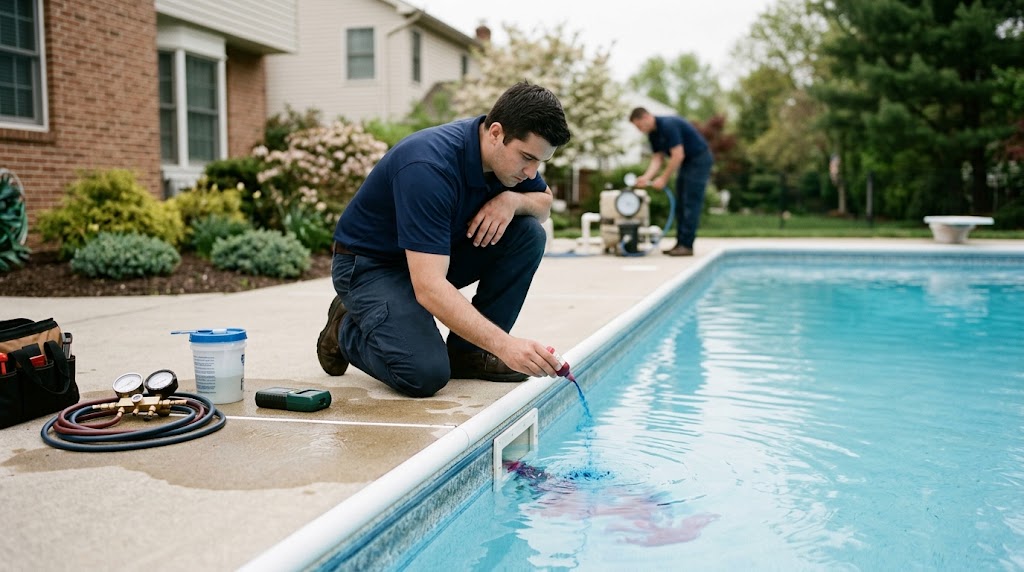
Pinpointing Swimming Pool Leaks in Marlboro Backyards
Backyard swimming pools are a hallmark of residential properties across Marlboro Township. In suburban neighborhoods such as Morganville and Wickatunk, spacious custom parcels frequently feature large gunite, vinyl liner, or fiberglass in-ground pools equipped with complex multi-port filtration systems, dedicated spa spillways, cascading waterfalls, and automated chemical feeders.
However, maintaining thousands of gallons of contained water requires intact underground plumbing conduits and stable structural shells. An unmonitored leak can lose several inches of water every day, resulting in exorbitant utility bills, chemical imbalance, and severe soil erosion beneath expensive concrete pool patios. If you need reliable swimming pool leak repair Marlboro diagnostics, our non-invasive acoustic and dye testing methods pinpoint the source without tearing up your backyard deck.
Warning Signs of an In-Ground Pool Leak
While evaporation occurs naturally during hot summer afternoons, active plumbing or shell leaks exhibit distinct warning signs:
- Excessive Daily Water Loss: Your pool loses more than a quarter-inch of water per day that cannot be attributed to normal sun and wind evaporation.
- Inground Pool Leak Marlboro: Water level regularly drops below the skimmer mouth, causing the filtration pump to suck air and lose prime.
- Pool Plumbing Leak Marlboro NJ: Saturated soil, spongy turf, or standing puddles along the lawn between the pool perimeter and your equipment pad.
- Cracked Pavers & Deck Settlement: Concrete coping shifting, paver stones sinking, or voids opening underneath pool decking caused by leaking underground return lines.
- Spike in Chemical Consumption: Struggling to maintain chlorine and pH balance because constant fresh tap water refills dilute chemical concentrations.
Why Pool Lines Crack in Central New Jersey
The harsh winter freeze-thaw cycles of Monmouth County place extreme stress on underground PVC plumbing and pool fixtures. If pool lines are not thoroughly evacuated and sealed with airtight winterizing plugs in the autumn, residual water freezes inside underground pipes along Route 520 and Route 79 properties.
When spring opening arrives, pressurized water forces open micro-fissures in buried skimmer throats, light niches, or 90-degree elbow fittings. Furthermore, natural soil settlement around newly backfilled pools can shear rigid PVC lines where they enter the pool shell, creating substantial subterranean water loss.
Losing Water in Your Marlboro In-Ground Pool?
Do not allow escaping water to undermine your pool deck or wash away foundation soils. Schedule a comprehensive diagnostic test today.
Call (201) 510-1615Our Step-by-Step Pool Diagnostic Protocol
-
1
Static Evaporation Verification (Bucket Test)
We verify daily water loss against ambient evaporation rates under identical environmental conditions to confirm that an active physical breach exists.
-
2
Plumbing Line Hydrostatic Pressure Isolation
Using inflatable pneumatic test plugs, we seal and pressurize individual suction lines, return lines, main drains, and cleaner feeds with air and water to verify pressure integrity.
-
3
Underwater Hydrophone Acoustic Scanning
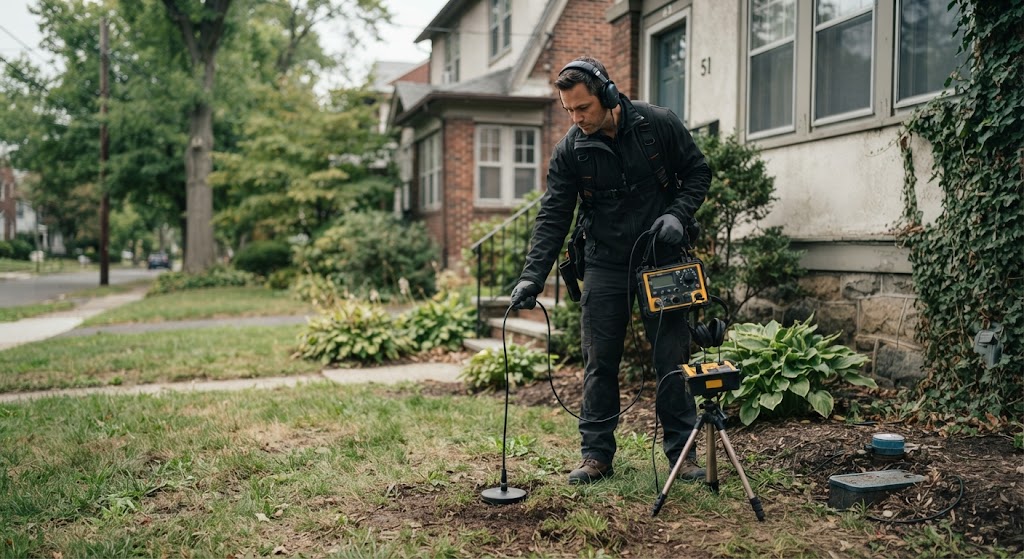
A specialized underwater microphone (hydrophone) is placed in the pool water to listen for the distinct acoustic signature created by water escaping through structural tears, light conduits, or main drain sumps.
-
4
Precision Dye Testing of Shell Fittings
Fluorescent dye syringes are applied around skimmer throats, return eyeball fittings, step gaskets, and underwater light niches to visually verify where escaping currents draw dye out of the pool.
What Happens After the Leak Is Pinpointed
Once our technician marks the precise location of the leak:
- Structural Fitting Sealing: Leaks located at light niche conduits, skimmer throat seams, or vinyl liner tears can frequently be sealed underwater using specialized two-part epoxy compounds or vinyl weld patches without draining the pool.
- Underground Pipe Repair: When an underground return or suction line fails beneath the lawn or patio, our precise coordinate mapping allows for a targeted excavation pit directly over the broken PVC fitting, avoiding deck removal.
Under New Jersey plumbing regulations, permanent modifications to residential water supply lines or auto-fill connections must comply with state codes and be overseen by a NJ licensed master plumber . Remember that before any outdoor excavation begins, state law requires notifying NJ One Call (811).
Cost Factors & Preventative Maintenance
Testing costs depend on pool size, feature complexity (attached spas, waterfalls, separate solar loops), and whether the breach is located in accessible surface fittings or deep underground plumbing runs. Pinpointing the exact coordinate prevents thousands of dollars in unnecessary deck demolition.
To protect your pool against seasonal leaks:
- Always hire experienced professionals to blow out lines and install freeze plugs before New Jersey winter temperatures drop below freezing.
- Inspect skimmer throats and tile lines every spring for hairline settlement cracks.
- Maintain proper water chemistry to prevent acidic corrosion of copper heat exchangers and rubber pump gaskets.
When a Pool Leak Demands Immediate Action
If your pool water level is dropping rapidly (more than 2 inches in 24 hours), or if you notice sinkholes opening beneath pool concrete decking or near your home's foundation, turn off your pool pump immediately to avoid pump burnout and structural collapse.
Many in-ground pools utilize natural gas heaters. If you ever detect the distinct odor of gas near your pool equipment pad, shut off electrical power to the pump from a safe distance, evacuate the area immediately, and call your gas utility or 911.
Pool Leak Commonality in Marlboro Neighborhoods
In-ground pools are widespread across Morganville, Wickatunk, Robertsville, and custom residential enclaves near Big Brook Park. Because many of these pools were installed between the 1980s and early 2000s, underground PVC piping and structural light fittings have reached an age where thermal movement and ground shifts require scientific leak diagnostics.
Frequently Asked Questions
Place a bucket filled with pool water on the pool steps, marking water levels inside and outside the bucket. After 24 hours, compare the marks. If the pool water level drops faster than the water inside the bucket, your pool is experiencing an active leak rather than natural atmospheric evaporation.
If underground suction or return lines are improperly blown out or winterizing plugs fail, water trapped in buried PVC freezes and expands, cracking pipes, skimmer throats, or manifold fittings during sub-zero Monmouth County winter freezes.
Yes. Pressurized water leaking from return or suction lines washes away supporting sand and sub-base aggregate beneath concrete pool decks, causing pavers to settle, concrete pads to crack, and undermining pool structural walls.
Find Your Pool Leak Without Tearing Up Your Deck
Stop wasting water and chemicals. Speak directly with our local pool leak diagnostic specialists today.
Call (201) 510-1615